Working with your team
Talk to your agents the way you would talk to people: in plain words, as short as you like. No prompts to learn, no settings to tune first.
One thread per agent
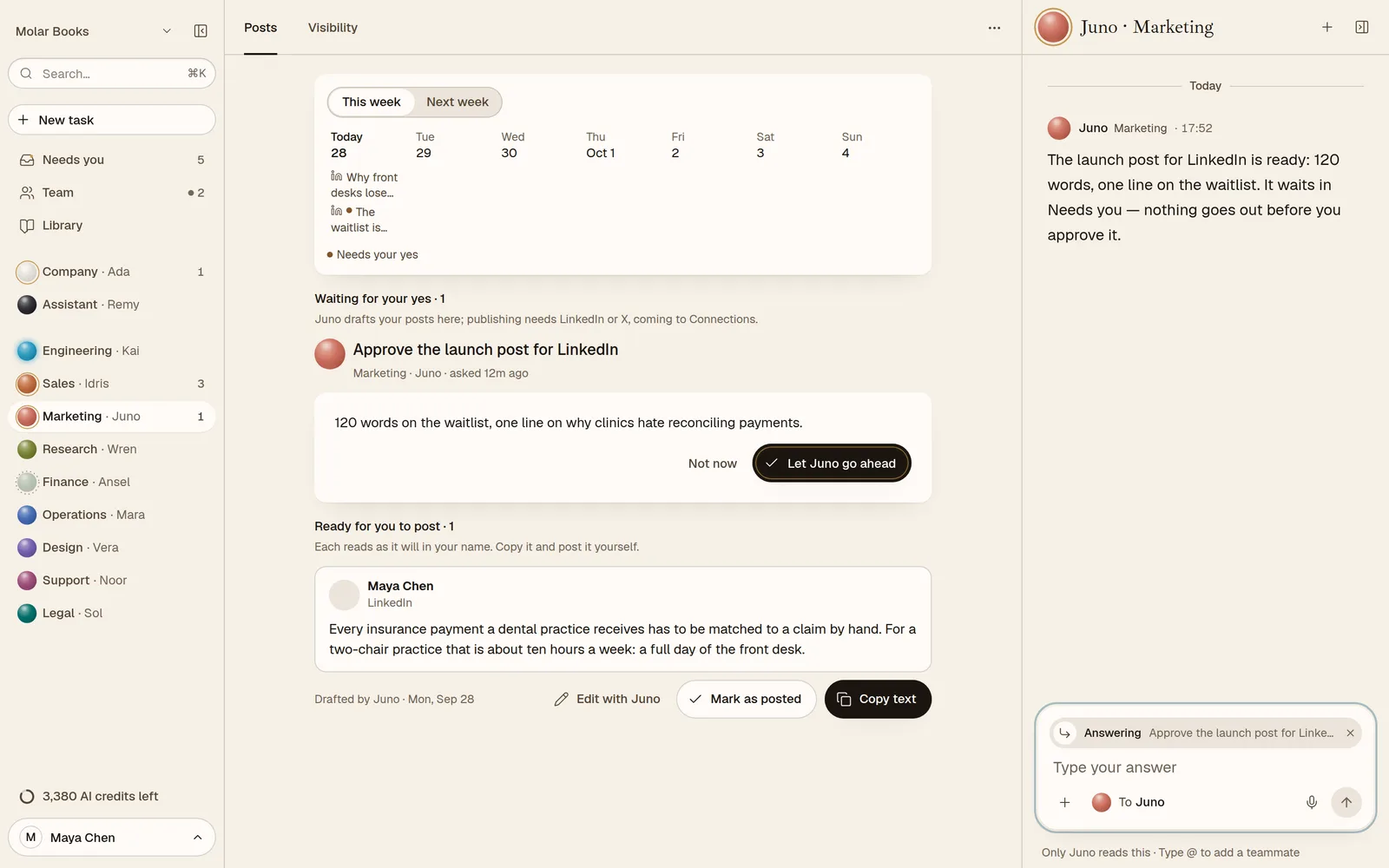
Every agent has its own chat thread, listed by job in the sidebar: Company · Ada, Engineering · Kai, Sales · Idris and the rest. Open one and you see two things side by side:
- The chat with that agent, on the right.
- Its work, in the middle: Kai's website preview, Idris's leads and emails, Ansel's money and AI usage, Wren's competitor notes.
So you talk about the work while you look at it.
When a thread is quiet, it offers a few one-tap starters, like Find 10 more leads or Draft a follow-up.
Ada leads
Ada runs the company for you. Give her anything, big or vague, and she turns it into owned work: each piece goes to the one teammate whose job it is. She follows up, tells you what moved, and writes your brief every morning.
You can always skip her and go straight to the agent you need.
Bring someone in with @
Type @ in a conversation to bring another agent in: @Juno, can you make this email sound more like us? The agent you mention answers in the same conversation.
Give work a shape: tasks
For anything with an outcome, press New task: pick who does it, say what you want, and add a date if it matters. The agent starts right away. Tasks show on the Team page, so you can see who is working on what without asking.
Your agents learn your company
Everything you tell one agent is available to all of them. Your answers to Ada's first questions, the decisions you make, the feedback you give on a draft: it all lands in your company's memory, and every agent reads it before it acts. Tell them once.
Talk from anywhere
The app works on your phone: a bar at the bottom gives you Needs you, Team and Ada one tap away. You can also reach your team from email or chat apps you already use.
Tips that make a real difference
- Say what good looks like. "Three leads we can actually reach this week" beats "find leads".
- Say what to avoid. "Never promise a delivery date" is worth saying once; it goes into memory.
- React to drafts. "Shorter, and less salesy" on an email draft teaches Idris and Juno how you sound.
- Ask why. Every agent can explain what it did and where it got something from.