Memory
Your company has one memory. Everything your team learns lands there, and every agent reads it before it acts. You tell them something once.
What goes in
- Who you are, who it is for, what comes next. Your company's founding notes, written from what you told us at the start and from Ada's first questions.
- Decisions. What you chose and why.
- Lessons. What worked and what didn't.
- Facts and preferences. Your prices, your tone of voice, the thing you never want said.
- Goals. What this month is about.
Your team adds to it as it works. You can add to it by just telling any agent: "Remember: we never discount below 20%."
Where to find it
Open Library in the sidebar. It has three shelves:
| Shelf | What is on it |
|---|---|
| Documents | Everything your team writes: briefs, plans, competitor notes, drafts. Each shows whether it is a draft, approved or live. |
| Files | Every file you or your team upload. |
| Memory | What your company knows: the facts and the decisions you made. |
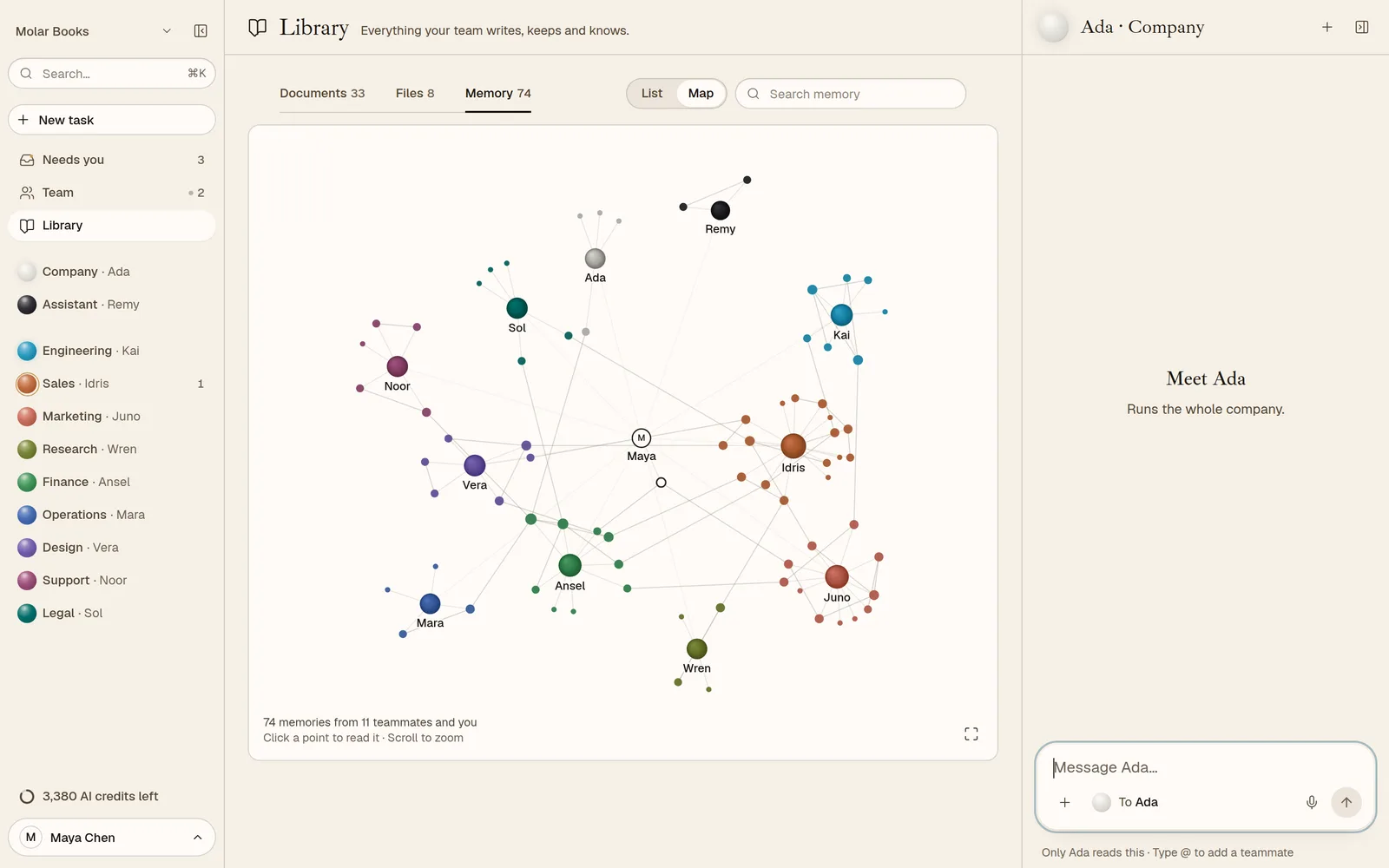
Memory has two views: a List, newest first, and a Map that shows how everything your company knows connects.
Search in plain words
Type into Search memory and you get every note with those words. Your agents search the same memory before they act, so you never have to paste context into a chat.
Why one memory matters
Separate AI tools each remember a slice, or nothing at all. With one memory, the email Idris writes knows the tone Juno found, the price Ansel set and the promise you told Ada never to make. Your company gets better at being itself every week.